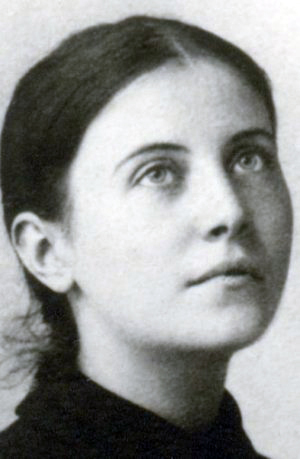
Gemma Galgani
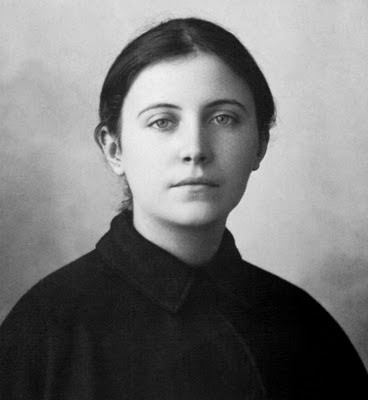
- Tradition:
- Catholic
- Born:
- March 12, 1878
- Died:
- April 11, 1903
- Birthplace:
- Borgo Nuovo di Camigliano, Lucca, Italy
- Beatified:
- May 14, 1933
- Canonized:
- May 2, 1940
- Feast Day:
- Apr. 11
- Patronages:
- People seeking purity and deeper spiritual life, Pharmacists, Pharmacy technicians, Students and young people seeking holiness, Those struggling with temptation, Those suffering from illness (especially tuberculosis)
Biography
Gemma Galgani was born on March 12, 1878, in Borgonuovo di Camigliano near Lucca, Italy, into a devout Catholic family. Her father, Enrico Galgani, worked as a pharmacist, and her mother, Aurelia, was known for her deep piety and tenderness. From childhood, Gemma displayed an unusual spiritual sensitivity—an interior seriousness combined with simplicity and warmth. She was especially devoted to the Sacred Heart of Jesus and developed a habit of intimate, conversational prayer.
Her early years were marked by profound suffering. Her mother died when Gemma was still young, a loss that deeply shaped her spiritual life. Not long after, financial difficulties overtook the family, and her father also passed away. Orphaned and facing poverty, Gemma experienced instability and hardship that might have embittered another soul. Instead, these trials seemed to intensify her reliance on God. She often described feeling spiritually accompanied in her loneliness, as though Christ Himself were her closest companion.
As a young woman, Gemma suffered from severe illness—variously described as spinal meningitis or tuberculosis of the spine. Her condition left her bedridden and in excruciating pain. Doctors believed her case hopeless. During this period she developed a deep devotion to Gabriel of Our Lady of Sorrows, whom she credited with her sudden and complete recovery after fervent prayer. This healing marked a turning point. From then on, she desired to dedicate her life entirely to God.
She longed to enter religious life, particularly with the Passionists, whose spirituality centered on meditation upon the Passion of Christ. However, her fragile health and mystical experiences led some religious communities to hesitate in admitting her. Though she never formally entered a convent, she lived in the home of the Giannini family in Lucca, where she embraced a hidden life of prayer, sacrifice, and charity. In this ordinary household setting, she pursued an extraordinary interior life.
Gemma died at the age of twenty-five on April 11, 1903, after enduring prolonged illness with remarkable serenity. Her short life was marked by intense mystical phenomena, deep humility, and unwavering devotion to Christ crucified.
Writings
Though she possessed limited formal education, Gemma left behind a remarkable collection of spiritual writings. At the request of her confessor, she composed an autobiography, along with letters and a diary that detail her interior life. These writings reveal a soul of striking candor, emotional depth, and theological simplicity.
Her autobiography recounts her childhood, family tragedies, illness, and mystical encounters. What stands out is not theological sophistication but immediacy—she writes with the voice of someone speaking directly to God. Her language is affectionate and personal. She frequently addresses Jesus in the second person, expressing love, sorrow for sin, and longing for union.
Her letters, written to spiritual directors and friends, show another dimension of her personality: warmth, humor, vulnerability, and concern for others. Despite her mystical experiences, she did not present herself as extraordinary. On the contrary, she often lamented her perceived unworthiness and weakness. Her diary entries reveal an intense rhythm of consolation and desolation—moments of radiant joy followed by profound spiritual darkness.
Theologically, her writings center on redemptive suffering, reparation for sin, Eucharistic devotion, and filial trust in Mary. She saw suffering not as punishment but as participation in Christ’s love. Her spirituality aligns closely with Passionist theology, emphasizing meditation on the Cross as the path to holiness.
Miracles
Saint Gemma is most widely known for the mystical experiences that accompanied her final years. She reported frequent visions of Christ, the Virgin Mary, her guardian angel, and various saints. Central to her spirituality was an intimate participation in the Passion of Jesus. Each Thursday evening, she would enter into profound prayer, meditating on Christ’s agony in the Garden of Gethsemane.
Beginning in 1899, she is said to have received the stigmata—the visible wounds corresponding to those of Christ crucified. These wounds reportedly appeared on her hands, feet, and side every Thursday night and disappeared by Friday afternoon, leaving no permanent scarring. Witnesses described her entering into states of ecstasy during which she seemed unaware of her surroundings, absorbed entirely in contemplation of the suffering Christ.
Gemma also experienced periods of intense spiritual trial. She described temptations, interior darkness, and even physical attacks by the devil—experiences she interpreted as part of spiritual warfare. Yet she responded with humility and trust, insisting that all glory belonged to God and not to herself. Those who observed her noted her obedience to spiritual directors and her willingness to submit her experiences to Church authority, a sign of authenticity in the Catholic mystical tradition.
The miracle most closely associated with her earthly life was her healing from near-fatal illness through the intercession of Saint Gabriel. After her death, numerous cures were attributed to her intercession. Reports of physical healings and spiritual conversions spread, especially among those devoted to the Passionist spirituality she cherished.
Her sanctity was formally recognized decades later. She was beatified in 1933 and canonized in 1940 by Pope Pius XII.
Legacy
The legacy of Saint Gemma Galgani is one of hidden intensity. She did not found an order, preach to crowds, or write theological treatises. Yet her influence has spread widely, particularly among those drawn to contemplative prayer and the mystery of redemptive suffering.
She is often called the “Daughter of the Passion” because of her profound union with the suffering Christ. The Passionist Order played a significant role in promoting her cause for canonization and in spreading devotion to her life and writings. Her example has inspired many laypeople who seek holiness in ordinary circumstances rather than within formal religious life.
Gemma’s life challenges modern assumptions about success, visibility, and achievement. She lived most of her short existence in obscurity, illness, and dependency on others. Yet within that hidden life unfolded a profound interior transformation. Her sanctity demonstrates that mystical union is not reserved for cloisters alone but can blossom in the midst of family homes, financial hardship, and bodily weakness.
Today, she is invoked especially by those suffering from illness, those seeking purity of heart, and those longing for deeper intimacy with Christ. Devotion to her remains particularly strong in Italy and among communities devoted to the Passion of Christ.
Her life stands as a testimony that holiness is not measured by public accomplishment but by love—steady, surrendered, and willing to unite itself to the Cross.
Photos