Dionysius the Areopagite
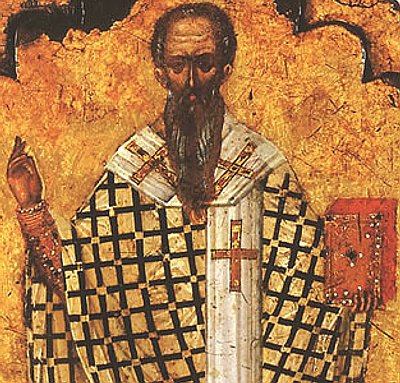
- Tradition:
- Catholic
- Birthplace:
- Athens, Greece
- Feast Day:
- Oct. 3
- Patronages:
- Athens, Mystical theology, Philosophers
Biography
According to the Acts of the Apostles (Acts 17:34), Dionysius was a member of the Areopagus in Athens—a council of notable citizens responsible for religious and moral oversight—who converted after hearing St. Paul preach at the Areopagus. This brief biblical reference is the earliest and most historically grounded mention of him. As a figure of the Athenian intellectual elite, he would have been steeped in Greek philosophy, likely conversant with Platonism and Stoicism. His conversion symbolizes the encounter between Hellenistic philosophical culture and the emerging Christian proclamation.
Early Christian tradition elaborates considerably beyond the sparse scriptural reference. Later accounts describe him as becoming the first bishop of Athens, shepherding a small but intellectually vibrant Christian community in a city still marked by pagan temples and philosophical schools. In some Western medieval traditions, he was even identified with St. Denis of Paris, though this identification is historically untenable and reflects devotional conflation rather than evidence.
The historical Dionysius thus stands at the crossroads of Scripture and tradition. While little verifiable biographical detail survives, his name became attached to one of the most influential theological corpora in Christian history. Whether the writings attributed to him were actually composed by the Areopagite himself or by a later Syrian monk writing under his name (commonly called “Pseudo-Dionysius”), the spiritual persona of Dionysius represents the intellectual convert: one who moves from philosophical speculation into mystical union with the living God.
Writings
The body of mystical theology attributed to Dionysius is known collectively as the Dionysian corpus. It includes four major treatises and ten letters:
- The Divine Names
- The Mystical Theology
- The Celestial Hierarchy
- The Ecclesiastical Hierarchy
These works likely originated in late 5th or early 6th century Syria, yet they were received for centuries as apostolic in origin. Their authority shaped both Eastern and Western Christian theology profoundly.
In The Divine Names, Dionysius explores how God can be spoken of through affirmations (God is Good, Being, Life, Wisdom) while also insisting that God infinitely surpasses every concept. Language about God must culminate in reverent unknowing.
In The Mystical Theology, he develops what later came to be called “apophatic” or negative theology—the way of unknowing. God is beyond being, beyond intellect, beyond every name. The soul ascends toward divine union not by accumulating concepts, but by relinquishing them in contemplative darkness.
The Celestial Hierarchy describes the ordering of angelic beings into nine choirs, structured in triads. This vision deeply influenced medieval angelology and Christian cosmology.
The Ecclesiastical Hierarchy parallels the angelic order with the sacramental and ministerial life of the Church. For Dionysius, liturgy is not symbolic in a weak sense—it is a participation in heavenly reality.
His writings profoundly influenced figures such as Maximus the Confessor, Thomas Aquinas, Bonaventure, and later mystical authors. Through them, Dionysius shaped Christian metaphysics, mysticism, and sacramental theology for centuries.
Legacy
The legacy of Dionysius is immense. His synthesis of Neoplatonic metaphysics and Christian theology gave the Church a conceptual vocabulary for articulating divine transcendence without compromising divine intimacy.
In the Byzantine world, his thought shaped Eastern Orthodox mysticism, especially the theology of divine light and hierarchical participation. In the Latin West, his works entered through translation and became foundational in scholastic theology. Thomas Aquinas cites Dionysius more than almost any other Church Father outside Augustine.
His apophatic theology deeply influenced later mystical traditions, including the anonymous author of The Cloud of Unknowing and many contemplative movements that emphasize silence before the mystery of God.
Even modern theology continues to wrestle with his vision:
- God beyond being
- Hierarchy as participation, not domination
- Liturgy as cosmic ascent
- Knowledge fulfilled in loving unknowing
Whether or not the historical Areopagite wrote the corpus, the name “Dionysius” came to represent a bridge between Athens and Jerusalem, philosophy and revelation, intellect and contemplation.
He remains a figure of profound importance for anyone exploring the relationship between metaphysical inquiry and mystical union—a saint whose enduring gift is a path into the luminous darkness of God.
Miracles
Because so little is historically known about Dionysius himself, miracle traditions surrounding him emerged gradually through devotional imagination.
Some traditions claim that Dionysius witnessed the eclipse at Christ’s crucifixion, allegedly exclaiming that either the God of nature suffered or the universe was dissolving. Though historically improbable, this story reflects the theological conviction that Dionysius recognized cosmic significance in Christ.
Later medieval Western legends—especially when he was conflated with St. Denis of Paris—attribute martyrdom and miraculous endurance to him. In those stories, he was beheaded and continued walking while carrying his head, preaching repentance. This dramatic imagery belongs properly to the cult of St. Denis but became entangled with Dionysian identity in Western Europe.
In Eastern Christian tradition, however, Dionysius is revered less for physical miracles and more for intellectual and mystical illumination. His “miracle” is theological: articulating how divine transcendence and liturgical symbolism open the human person to union with God.
Thus, the miraculous dimension of Dionysius lies primarily in his spiritual authority and the transformative power attributed to his writings rather than in historically verifiable supernatural events.